
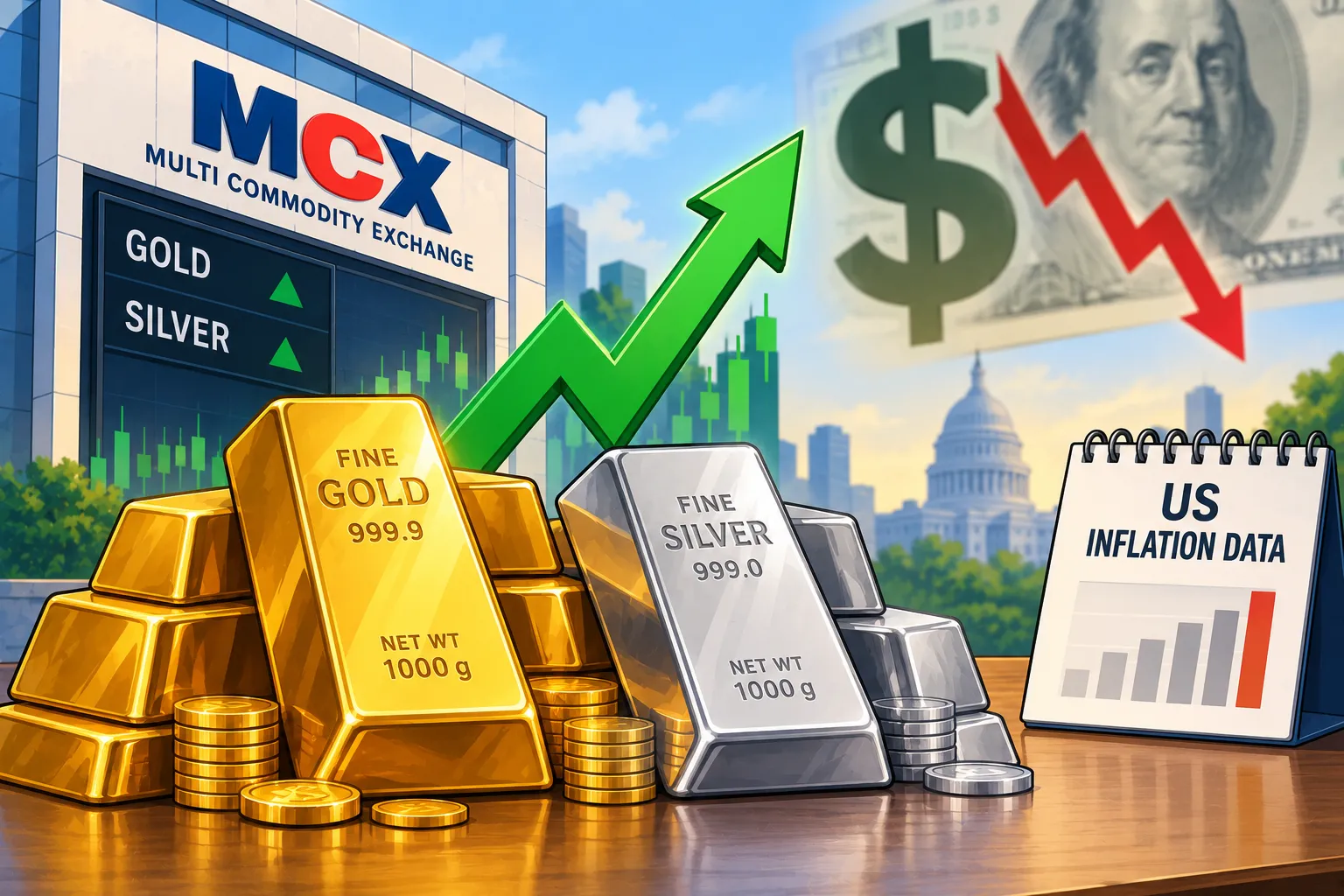
Gold and silver futures moved higher in early trade on Tuesday, September 8, with global bullion strength and a weaker US dollar supporting domestic prices.
At around 9:10 am, MCX gold futures for October delivery traded at ₹1,53,461 per 10 grams, up 0.42%. MCX silver futures for December delivery rose 0.67% to ₹2,40,615 per kg.
The gains underscored continued sensitivity in the bullion market to global currency movements and the outlook for US interest rates. Silver outperformed gold in percentage terms during the early domestic session, although both contracts were tracking the same broad improvement in international precious-metal prices.
Gold and silver gains build during morning trade
The early MCX rise extended as trading progressed. By around 9:54 am, gold’s October contract was reported at ₹1,53,992 per 10 grams, up ₹1,174, or 0.77%, from the previous reference level.
Silver’s December futures contract was quoted near ₹2,41,491 per kg at around 9:55 am, up ₹2,475, or 1.04%.
These are intraday trading snapshots rather than official closing or settlement prices. Commodity futures can move quickly during the session as international prices, currency markets and domestic demand conditions change.
| Commodity contract | Early trade level | Change | Later morning snapshot |
| MCX Gold October | ₹1,53,461 per 10g | Up 0.42% | ₹1,53,992 per 10g, up 0.77% |
| MCX Silver December | ₹2,40,615 per kg | Up 0.67% | ₹2,41,491 per kg, up 1.04% |
For commodity market participants, the difference between the two snapshots highlights why price levels should always be read with their contract month and timestamp. An intraday quote is not the same as an MCX closing rate.
Softer dollar supports global bullion prices
The domestic move came alongside an improvement in international precious-metal prices. Spot gold rose about 0.6% to $4,429.89 per ounce at 02:08 GMT, while spot silver gained 1% to $66.78 per ounce.
A reported 0.4% decline in the US dollar index provided an important tailwind. Gold and silver are largely priced in dollars in global markets. When the dollar weakens, bullion can become relatively less expensive for buyers using other currencies, potentially supporting demand.
The relationship is not mechanical, and the rupee-dollar exchange rate also influences Indian bullion pricing. Still, a softer dollar is often closely watched by traders because it can affect international gold and silver sentiment.
Geopolitical developments involving the US and Iran were also part of the broader market backdrop, with investors monitoring safe-haven demand. However, the day’s price action should not be attributed to any one factor alone, as currency movements, global spot prices and expectations around US monetary policy were all relevant.
US inflation reports are the next market trigger
The immediate focus for bullion markets has shifted to key US economic data scheduled later this week.
US Producer Price Index data is due on Thursday, followed by Consumer Price Index data on Friday. These readings may influence expectations about the US Federal Reserve’s next policy decision.

Gold does not offer interest income, so it is particularly sensitive to the anticipated direction of interest rates and real yields. If inflation data changes market expectations for US monetary policy, the dollar and global bullion prices could react sharply.
For Indian investors and commodity participants, this matters because international price moves feed into domestic futures prices alongside USD/INR changes and local market factors. A shift in global rate expectations can therefore affect MCX gold and silver even when there is no major domestic policy announcement.
The upcoming data releases may be more consequential for the bullion market than one morning’s price move. They could influence whether the dollar remains under pressure and whether global investors continue to favour precious metals.
MCX rates are not retail gold prices
MCX futures should not be confused with jewellery-store or local physical bullion rates.
The MCX gold October and silver December figures refer to specified futures contracts traded on the commodity exchange. Retail gold prices, by contrast, depend on the city, purity, dealer or jeweller, local premiums, taxes, making charges and the methodology used by the rate provider.
For instance, one market update cited New Delhi’s 24-carat gold rate at ₹1,53,660 per 10 grams and silver at ₹2,39,630 per kg. Such city-level figures are indicative retail quotations and should not be compared directly with MCX futures prices as though they are identical products.
The distinction is important for readers searching for the gold price today in India. A jewellery buyer may see a final purchase price that is different from both a published city quote and an MCX futures level because of GST, making charges and retailer-specific pricing.
Also Read: SEBI Clears NSE IPO’s Next Step; Offer Dates Awaited
What Indian bullion participants should track
The September 8 move places attention on a small set of market variables that can shape the next direction in gold and silver:
- US PPI and CPI data, which may alter Federal Reserve rate expectations.
- The US dollar index and the rupee-dollar exchange rate.
- International spot gold and silver prices.
- MCX contract-specific trading levels, including contract month and session timing.
- Physical-market demand, local premiums and city-wise retail price differences.
Those using a commodity trading account to track or trade MCX contracts should distinguish exchange-traded futures from physical bullion buying. Likewise, investors accessing market-linked products through a demat account should recognise that gold ETFs, mutual funds and other investment vehicles may not move exactly in line with an intraday MCX quote.
Gold and silver began the day on a firmer note, but the durability of the move will depend heavily on global inflation data, the dollar’s direction and evolving expectations around US interest rates.