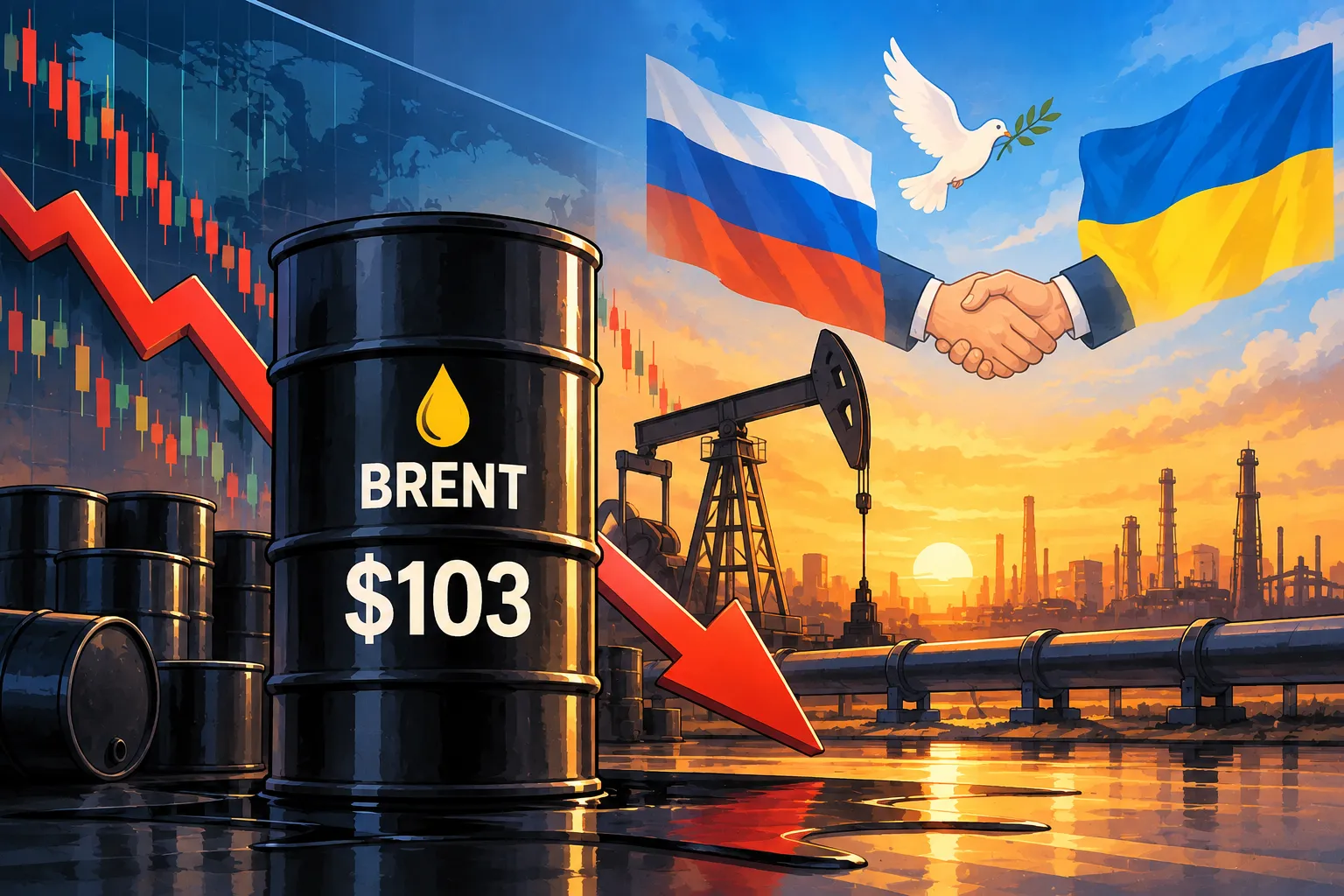
Brent crude futures fell 1.47% to $103.18 a barrel on October 12 after US President Donald Trump said Russia and Ukraine agreed to halt attacks on energy facilities. Russia had not commented, and Ukraine awaited details.
Brent and WTI Prices on Monday Morning
Oil prices slipped in early Asian trade on expectations of more Russian supplies. The figures below were reported by Reuters as of 0154 GMT on October 12 and moved through the session.
| Benchmark | Price | Change |
| Brent crude futures | $103.18 a barrel | Down $1.54, or 1.47% |
| US West Texas Intermediate crude | $90.31 a barrel | Down $1.54, or 1.68% |
ICE gasoil futures fell 3% in the same session, after Trump’s Friday diesel announcement. Brent still held above the $100 mark, which analysts have tied to continuing conflict in West Asia.
What Trump Announced and What Remains Unconfirmed
Trump said on Sunday that Ukraine and Russia had agreed to an energy ceasefire. Ukrainian President Volodymyr Zelenskyy said he was still waiting to see details of the arrangement, and Russia did not comment, according to Reuters.
This is not the first such claim. Trump also announced an energy ceasefire in mid-September, and neither Russia nor Ukraine confirmed an agreement at that time, according to Investing.com.
Tim Waterer, chief analyst at KCM Trade, said the announcements eased some immediate supply pressure. He added that questions remain over whether any ceasefire is valid and will last, and that the pullback is likely to stay limited unless there is clearer evidence it will hold.
Diesel Supply Pledges Behind the Price Move
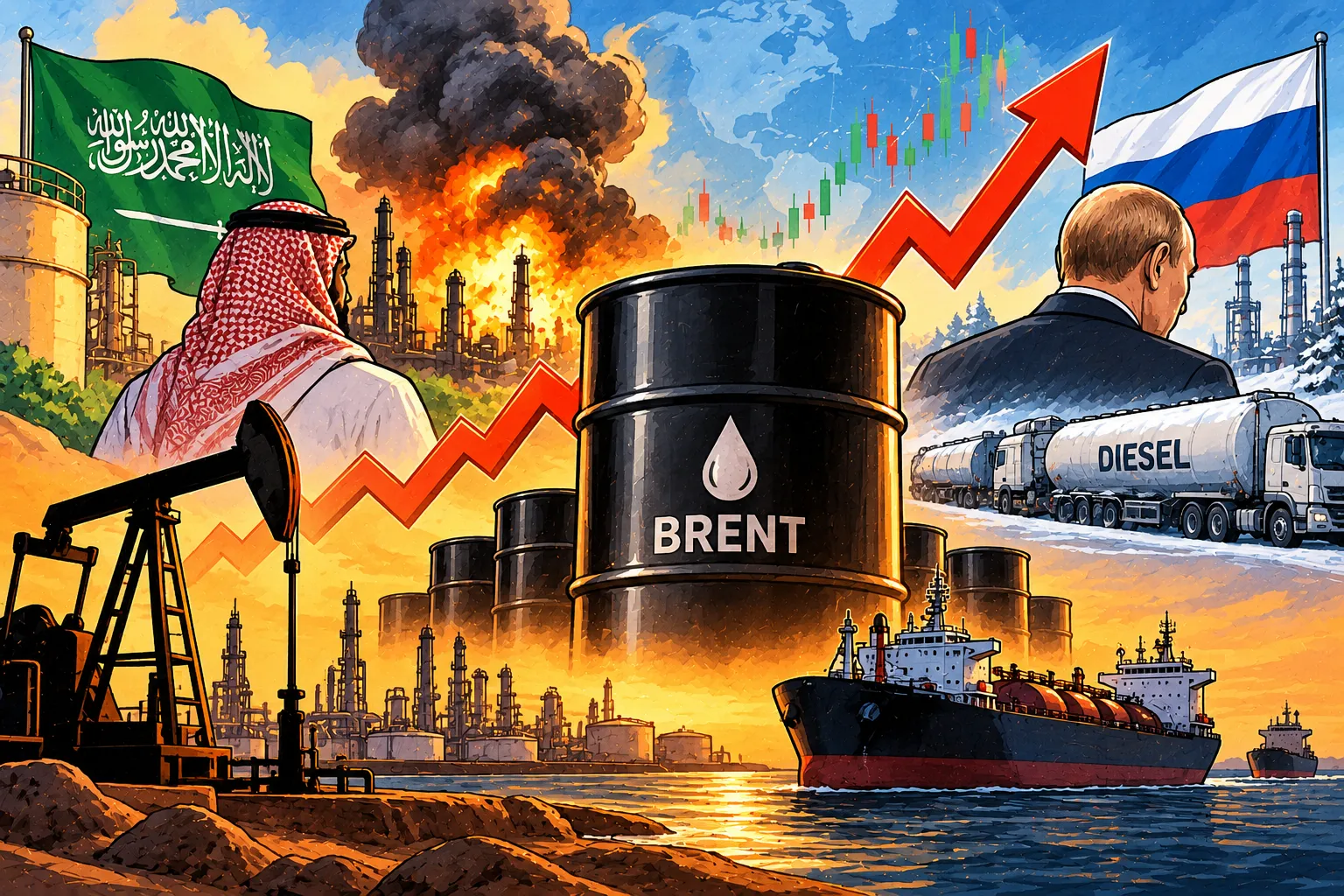
The ceasefire claim followed a US diesel supply deal with Moscow that Trump announced on Friday. The pledges, as described by Trump, are listed below.
- More than 300,000 metric tons of diesel, or about 2.25 million barrels, supplied immediately to US and global markets
- A further 500,000 tons in November
- Another 1 million tons immediately after that
For scale, the International Energy Agency forecasts global diesel consumption at close to 29 million barrels per day. IEA Executive Director Fatih Birol said on Sunday that all member countries should assess whether additional diesel releases from strategic reserves are needed. He also urged countries that have not fully delivered pledged volumes to speed up their remaining releases, with diesel given priority.
Why Brent Is Still Above $100 a Barrel
West Asia remains the main support for crude. The Houthis claimed responsibility for a Saturday strike on Riyadh’s international airport, and Saudi authorities reported a new attack there on Sunday. Trump said on Saturday that the United States was considering joining Saudi strikes on the Houthis, a spillover from the wider war with Iran that the US and Israel launched in February.

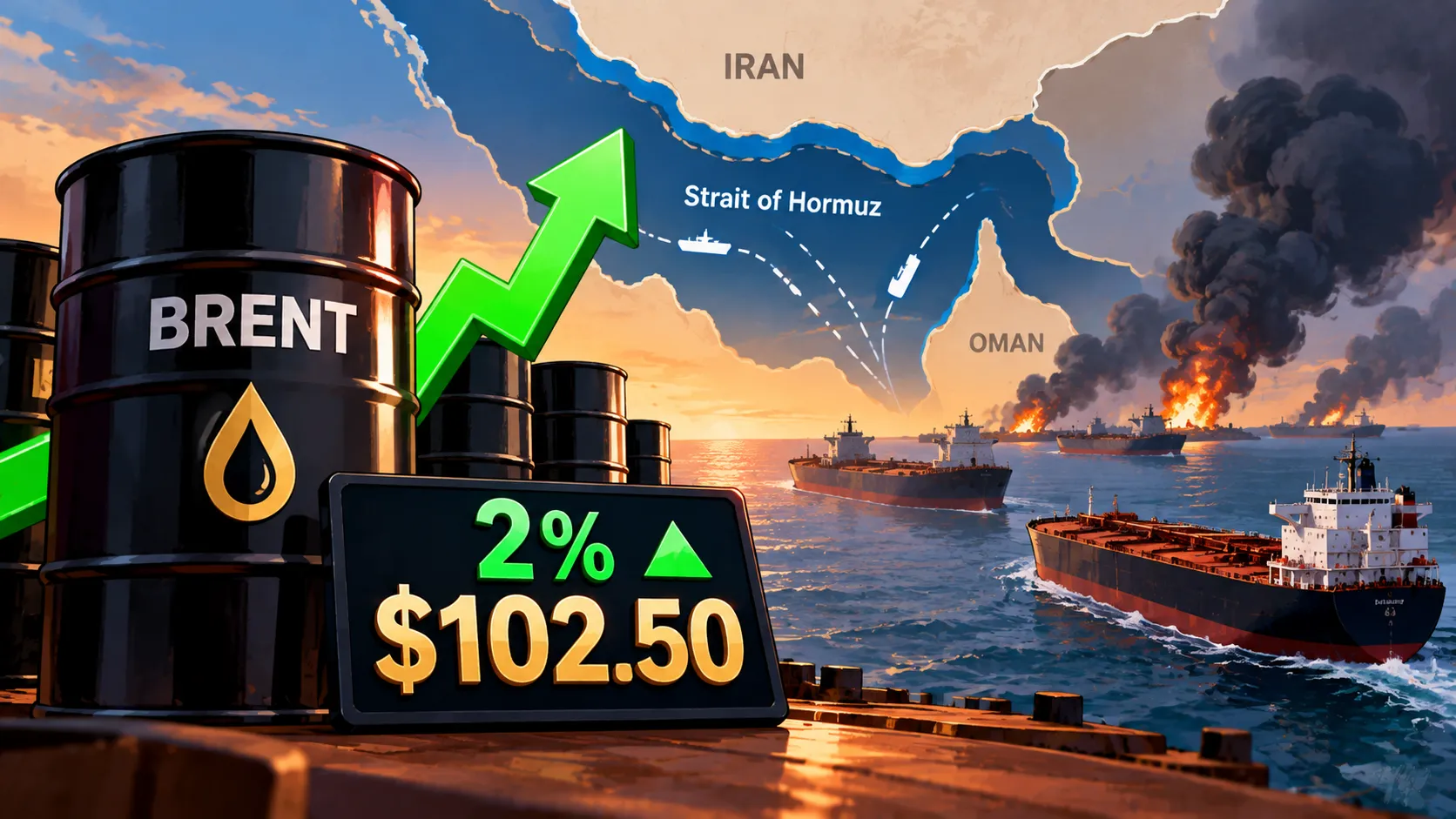
Shipping risks have also persisted. The United Kingdom Maritime Trade Operations reported over the weekend that a drone struck a tanker near the Sohar anchorage in Oman, while another vessel was damaged by an unknown projectile in the Strait of Hormuz. More attacks on tankers have been reported this month, which threatens a recovery in West Asia crude exports that was seen in September.
In the Gulf of Mexico, Shell, Chevron and BP were working to redeploy personnel and restore production at their platforms after Hurricane Isaias made landfall early on Saturday. Separately, Goldman Sachs raised its December Brent forecast to $90 a barrel from $85, according to Reuters.
Also Read: SIP Inflows Hit Record ₹32,490 Crore as MF Assets Drop 5.1%
What the Oil Move Means for Indian Markets
Crude is a direct input for Indian markets through inflation, the rupee and sector earnings. Analysts quoted by PTI on Sunday described crude oil as the biggest macroeconomic risk for the week. One of them added that relief from a softer inflation reading could prove short-lived if Brent stays above $100 a barrel.
September consumer price inflation is the first major domestic test this week, with wholesale price inflation data also due. Hariselvan Radhakrishnan of HST Wealth said a stronger reading could revive concerns over further RBI tightening, which would put rate-sensitive sectors such as banking, automobiles and real estate under pressure.
Analysts told PTI that crude oil futures are likely to stay volatile because uncertainty over US-Iran negotiations and tensions in West Asia keep supply risks elevated, even as hopes of a deal to reopen the Strait of Hormuz leave room for a correction. Navneet Damani of Motilal Oswal said the widening conflict has heightened concerns over energy shipments through the region, including the Bab el-Mandeb Strait.
On Friday, October 9, the Nifty Oil and Gas index was the only sectoral index in the red as the Nifty gained 289 points and snapped an eight-week losing streak, according to Business Standard.