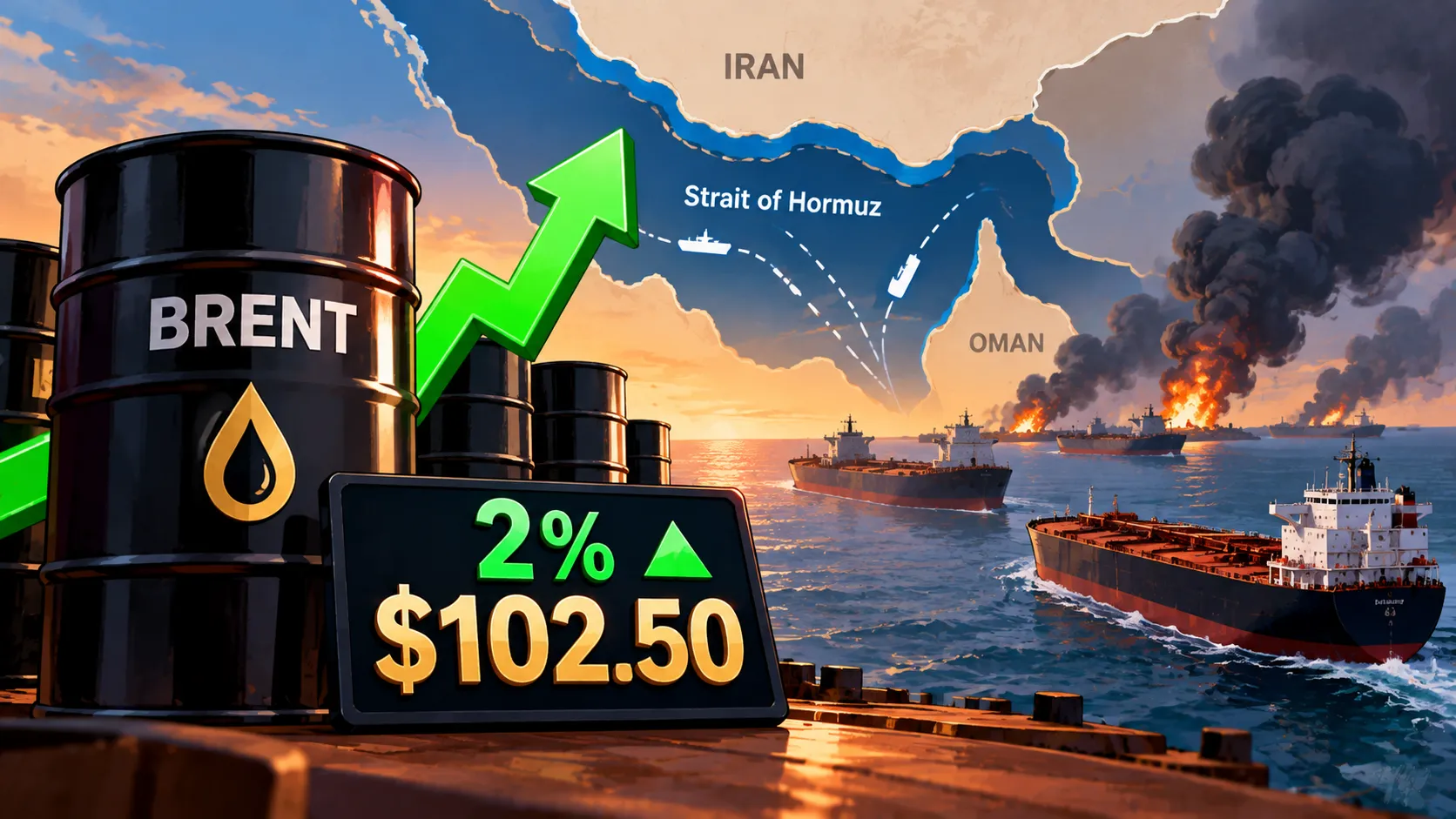
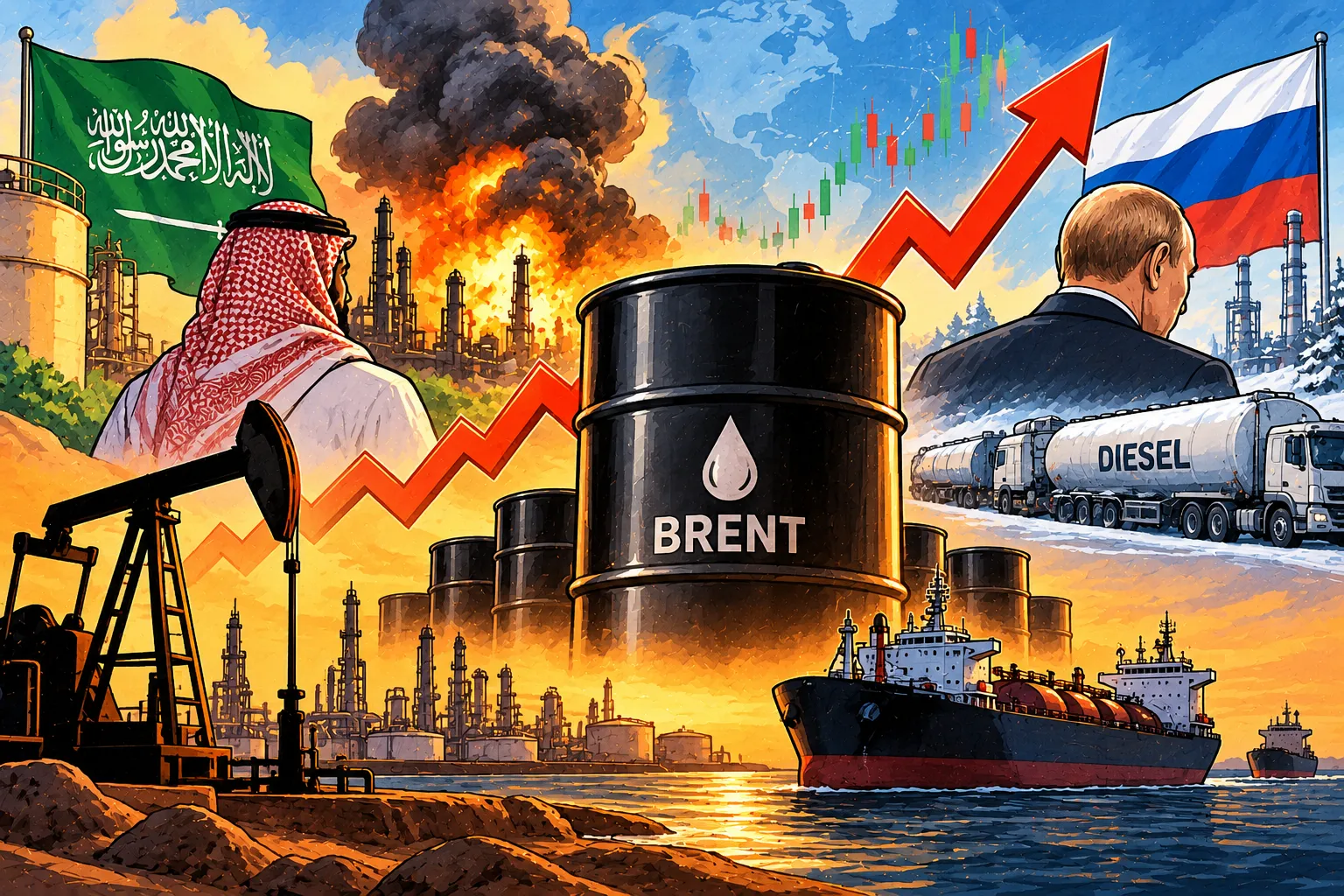
Brent crude futures rose to $106.58 a barrel on October 14, while US WTI crude gained to $94.94. Traders weighed Houthi attacks on Saudi Arabia against more Russian diesel heading to world markets.
Brent and WTI Prices on October 14
Brent crude futures rose 89 cents, or 0.8 per cent, to $106.58 a barrel by 0030 GMT (6:00 am IST) on Wednesday. US West Texas Intermediate (WTI) crude futures gained 80 cents, or 0.9 per cent, to $94.94.
Business Standard’s own headline on Tuesday said oil dipped as Russian diesel prospects countered Gulf supply risks. A day earlier, the two benchmarks moved in opposite directions. Brent fell 0.9 per cent on Tuesday. WTI rose 0.4 per cent.
On Monday, October 12, Brent traded at $106.79 a barrel at one point. That was its highest level since September 29.
Brent had risen about 1.5 per cent in the week to October 9. It then eased on Monday morning, before it rebounded.
Why Did Oil Prices Rise Today?
Oil rose on October 14 because supply fears outweighed the pull of extra Russian diesel. Reuters said traders were weighing two forces. The Houthi attacks on Saudi Arabia raise supply fears and lift prices. More Russian diesel could ease market tightness and limit the rise.
Saudi Arabia Faces New Attacks
Saudi Arabia’s energy ministry said on Wednesday that the Houthis attacked an administrative building of state-owned Saudi Aramco in the city of Dhahran. The attack caused a limited fire. The Houthis are an Iran-allied group in Yemen.
Reuters reported that the group has fired ballistic missiles and drones at Saudi Arabia over the past week. It says this is in return for the kingdom’s support of Yemeni government forces. Riyadh’s international airport has been hit four times. A strike on Saturday killed at least 12 people.
The Houthis opened their front against Saudi Arabia in July. They have targeted energy sites and Red Sea tankers. Saudi-backed forces in Yemen have since launched a campaign to retake areas held by the Houthis.
Saudi Arabia’s main airport was hit again on Sunday, a day after the deadly Saturday strike. The attacks came after a phone call between the Saudi and Iranian foreign ministers.
Hiroyuki Kikukawa, chief strategist at Nissan Securities Investment, said the supply worry from the Houthi and Saudi fighting is pushing prices higher.
Russian Diesel Offers a Counterweight
Russia has partly lifted its ban on diesel exports. That allows 500,000 tonnes, or about 3.7 million barrels, onto world markets. Reuters compared that amount to roughly one day of US consumption.
The US Treasury also issued a temporary general license so Russian diesel can reach global markets. A Gulf News report said the partial sanctions waiver runs through April 2027.
Kikukawa said the expected rise in Russian diesel exports should limit sharp price moves in either direction. He expects WTI to trade between $90 and $100 a barrel. That is his view, not a certain outcome.

Russia said on Tuesday that it sees no direct link between its peace talks with Ukraine and its diesel deal with the United States.
On Monday, traders also weighed a US claim that Russia and Ukraine had agreed to an energy ceasefire. European diesel futures fell by as much as 8.3 per cent that day.
What is the Difference Between Brent and WTI?
Brent is the benchmark price for much of the world’s oil. WTI is the main US benchmark. SEB analyst Bjarne Schieldrop noted that WTI is unusually low compared with Brent because of high shipping costs between the US and Europe.
Gulf Supply and the Strait of Hormuz
Saudi Arabia raised oil production last month despite disruption to shipments from the US-Iran war. OPEC said on Tuesday that this led to a sharp rise in output from OPEC+. OPEC+ is OPEC and its partners, which include Russia.
JPMorgan Chase puts exports from the Persian Gulf at 17.5 million barrels a day. That is 98 per cent of the level before the war.
Even so, shipping risk has not gone away. Eleven tankers came under attack in the Strait of Hormuz in the week that ended October 4. Two senior Iranian officials told Reuters that Iran is using new tactics against ships in the Strait of Hormuz. They said the aim is to keep oil prices high and affect the US midterm elections. Those are the officials’ claims, as reported by Reuters.
Goldman Raises Its December Forecast
Goldman Sachs raised its December 2026 forecast for Brent to $90 a barrel from $85. The bank estimates the current risk premium at just over $20 a barrel. A risk premium is the extra amount that prices carry because of supply worries.
On Monday, WTI traded near $90 a barrel while Brent stayed above $100, according to Gulf News. SEB forecasts WTI to average $81 in December 2026 and $73 in 2027. That is the bank’s forecast, not a market price.
The International Energy Agency’s chief, Fatih Birol, has urged members to check whether more diesel releases are needed. The agency’s governing board meets on October 15.
Also Read: Bank of Baroda Shares Slip After a $15 Billion Lawsuit
Why Oil Matters to Indian Markets
Oil prices can reach Indian markets through foreign investor flows and early market signals. PTI reported that foreign investors sold Indian equities in October while crude oil stayed elevated, the US dollar firmed and US bond yields rose.
Business Standard’s market live blog on October 14 also carried a headline saying GIFT Nifty signalled a negative open as Brent crude extended gains. GIFT Nifty is an early indicator for the Nifty 50 index.
What Are Traders Watching Next?
Traders are watching three things. They are the IEA board meeting on October 15, further Houthi attacks on Saudi Arabia and tanker safety in the Strait of Hormuz. Reports also say attacks on tankers have risen even as Gulf exports recovered.