The Sensex rose 383.55 points to 77,301.40 and the Nifty gained 149.75 points to 23,960.60 on November 4, a fifth straight gain. Media and metals led, IT fell, and midcaps and smallcaps outperformed.
Fifth Straight Gain
Indian equity benchmarks extended their rally for a fifth consecutive session on Wednesday, November 4. The BSE Sensex rose 383.55 points, or 0.50%, to settle at 77,301.40. The NSE Nifty 50 gained 149.75 points, or 0.63%, to end at 23,960.60, above the 23,950 mark. Both indices have moved to two-month highs.
The five-day run has been sharp. The Nifty and Sensex had already gained about 5% over the preceding four sessions, helped by easing oil prices and stock-specific moves such as Reliance Industries’ surge on November 2.
| Index | Oct 30 Close | Nov 4 Close |
| Sensex | 74,459.53 | 77,301.40 |
| Nifty 50 | 23,053.10 | 23,960.60 |
On Friday, October 30, the Sensex closed at 74,459.53 and the Nifty at 23,053.10, so the benchmarks have added roughly 3.8% and 3.9% in the three sessions since.
Broader Markets Outperform
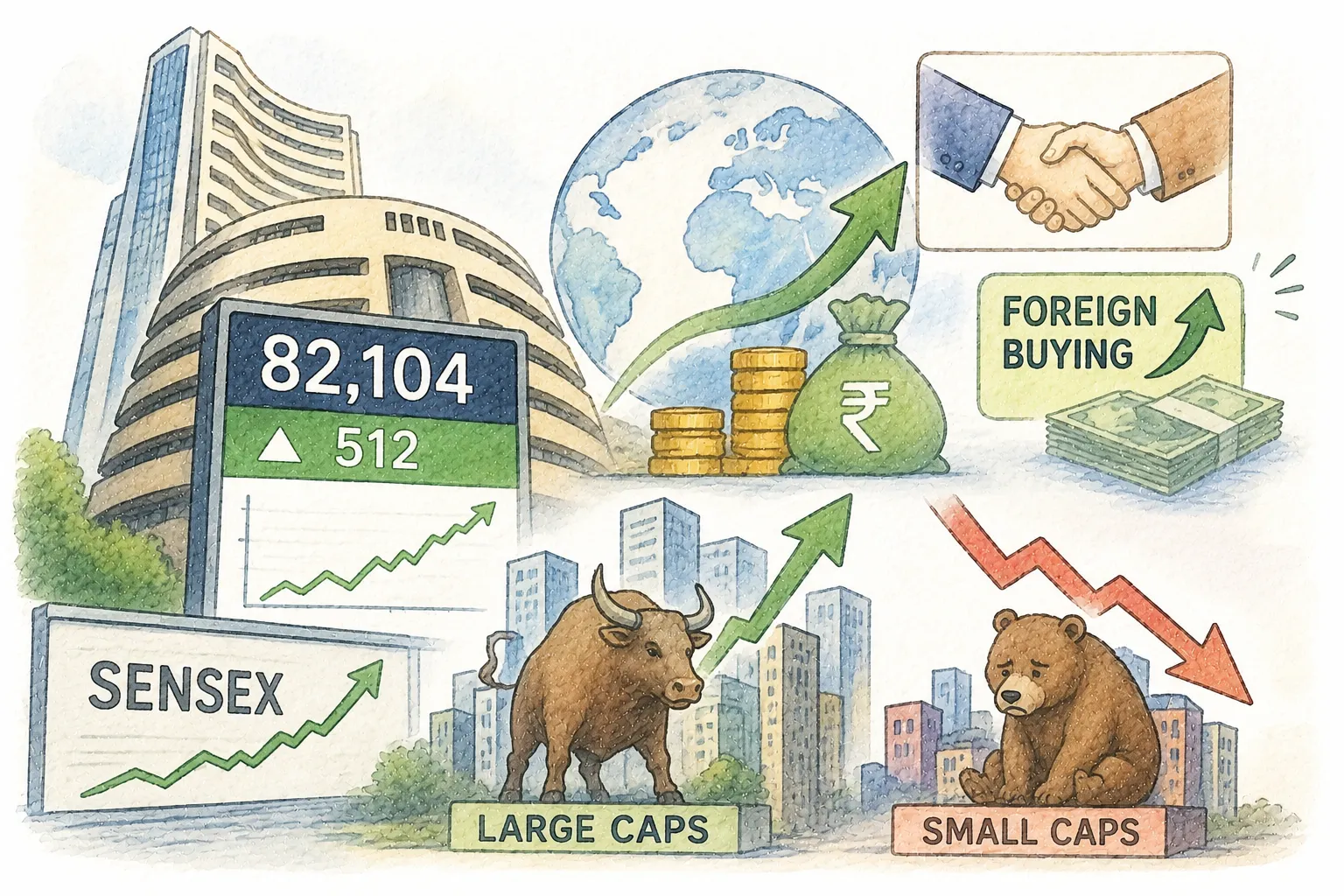
Smaller companies led the advance. The Nifty Midcap 100 rose about 1.55% to 59,505.50, and the Nifty Smallcap 100 gained 2% to 19,026.40. That means buying was broad and not limited to a handful of large stocks.
Market breadth was firmly positive. On the NSE, 2,948 shares advanced, 1,260 declined and 170 were unchanged. Within the Nifty 50, 36 stocks closed higher and 14 declined.
| Market Breadth (NSE) | Count |
| Advancing shares | 2,948 |
| Declining shares | 1,260 |
| Unchanged | 170 |
Media, Metals and Realty Lead
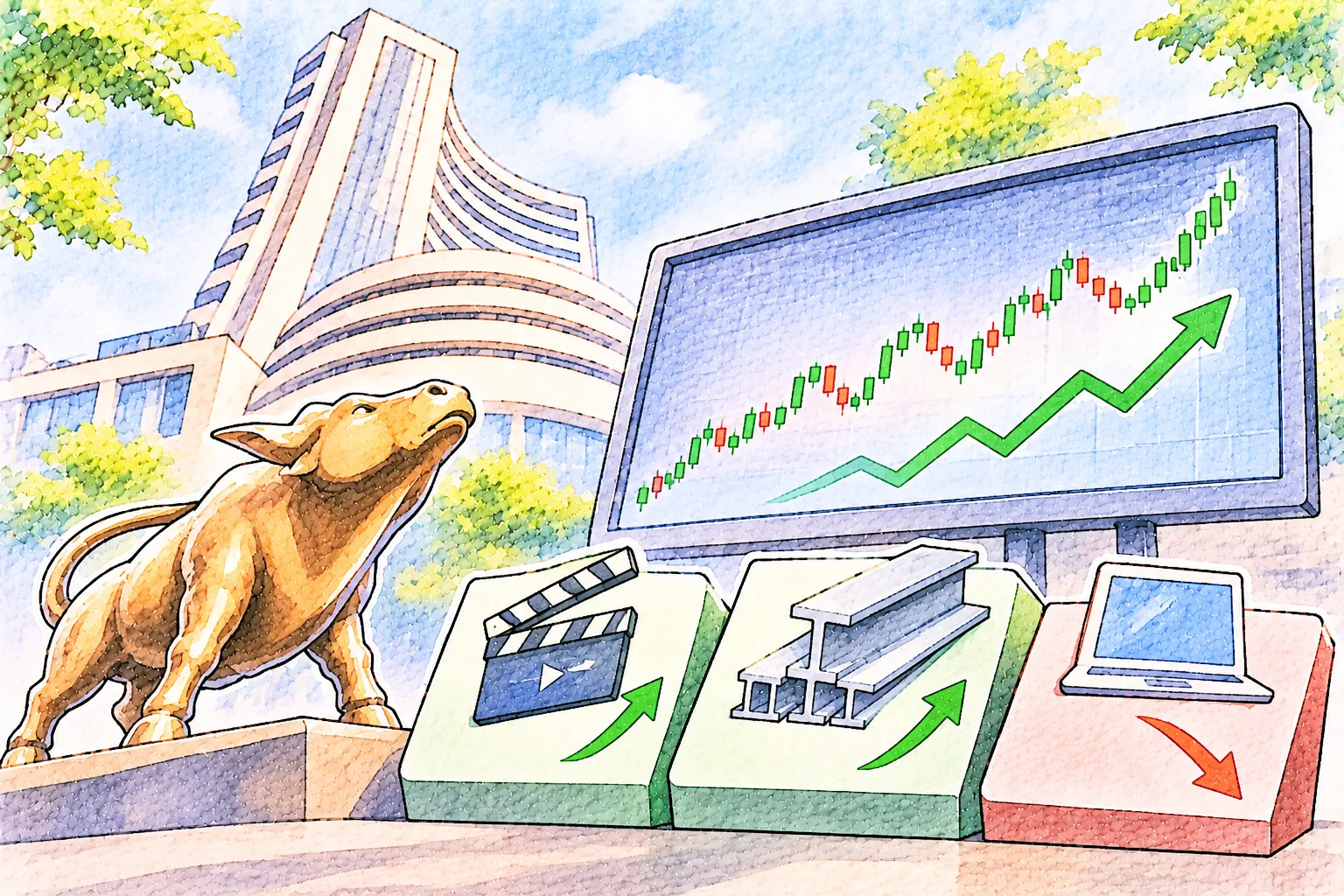
Most sectors ended higher. The Nifty Media index led, surging about 5%, followed by gains in metal, FMCG and realty stocks. Information technology was the only major sectoral loser, with the Nifty IT index down more than 1% and Tata Consultancy Services falling about 2.5%.
Among Nifty 50 stocks, Bharat Electronics rose about 5%, while Adani Enterprises and Titan gained about 4% each. Jio Financial Services and Max Healthcare were also among the top gainers.
The IT weakness stands out, since IT had been the strongest sector in October. The sources reviewed do not give a specific reason for Wednesday’s decline.

Global and Political Backdrop
The US midterm elections were in the headlines. Reports said Democrats won control of the US Congress, which was seen as a setback for President Donald Trump. The Indian market continued to rise regardless, and the Sensex and Nifty outperformed most Asian markets on the day.
Oil was another factor. Crude prices fell about half a percent in early trade on Wednesday as investors tracked the midterm results and their possible effect on efforts to end the conflict in the Middle East. Brent had settled at $104.77 on November 2, down 7.6%, after the US and Iran signalled openness to talks. Lower oil helps India, a large importer of crude.
Also Read: SBI Q2 Profit Rises 14.3% to ₹23,038 Crore as NII Climbs 14.7%, Gross NPA Falls to 1.39%
SBI and Earnings in Focus
Corporate results continued to shape stock moves. State Bank of India reported a 14.3% rise in Q2 profit to ₹23,038 crore on Tuesday, and its shares traded in a narrow range after the numbers. Redington shares jumped more than 7% on the day after a strong September-quarter report, and Lenskart reported a more than doubling of profit after the market closed.
Several large companies were due to report after the market on Thursday, November 5, including Bharti Airtel, Life Insurance Corporation, Titan, Mahindra and Mahindra, ONGC and LG Electronics India. Titan shares rose 4.2% to ₹4,754 on Wednesday ahead of its results, for which experts expect revenue to rise 17% to 20% year on year to between about ₹21,950 crore and ₹22,385 crore.
What to Watch Today
The market has risen about 5% in five sessions, and rallies of that size are often followed by some consolidation, though that depends on oil, global cues and earnings. The key items for Thursday are the results from Bharti Airtel, LIC, Titan, M&M and ONGC, movements in crude oil and whether IT stocks recover.
The figures here describe market closing levels on November 4, 2026. Markets can move quickly, and these numbers are not a forecast.