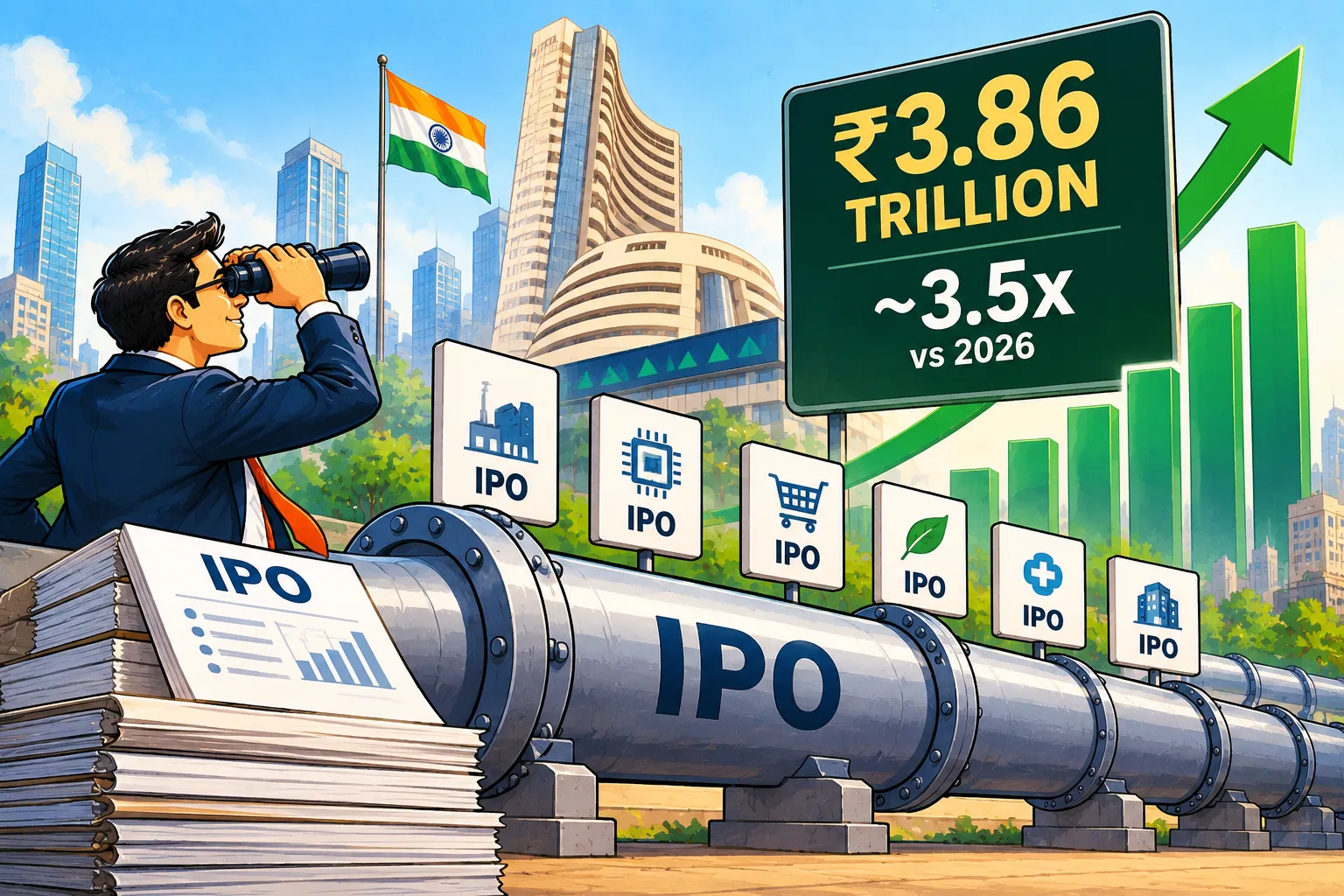
India's mainboard IPO pipeline has swelled to ₹3.86 trillion across roughly 205 companies with regulatory approval or awaiting it, nearly 3.5 times the ₹1.10 trillion actually raised through 84 IPOs so far in 2026, according to the Association of Investment Bankers of India.
The Scale Of The Pipeline
India's primary market is witnessing an unprecedented pipeline buildup, with mainboard IPOs currently in the works totalling ₹3.86 trillion, according to a mid-term white paper from the Association of Investment Bankers of India (AIBI). That compares with just ₹1.10 trillion actually raised through 84 mainboard issues so far in 2026. Of the ₹3.86 trillion pipeline, around 130 companies that have already received Sebi approval account for roughly ₹2.43 trillion, while another 75 companies that have filed draft prospectuses and are still awaiting approval represent the remaining ₹1.44 trillion, AIBI Chairman Mahavir Lunawat said.
"India's primary market has moved well beyond an episodic fundraising cycle. We have already seen ₹1.10 trillion mobilised through 84 mainboard IPOs in 2026 YTD," Lunawat said, framing the pipeline size and broadening investor participation as evidence the primary market is becoming a structural, rather than cyclical, channel for capital formation.
The Longer-Term Trend
Mainboard IPOs have cumulatively raised ₹8.36 trillion between 2016 and 2026 year-to-date, with annual fundraising climbing from ₹26,494 crore in 2016 to ₹1.76 trillion in 2025. The number of mainboard issues has grown from 26 in 2016 to 103 in 2025. The intermediary ecosystem has scaled alongside this: the number of registered merchant bankers rose from 188 in September 2016 to 250 in September 2026, an increase of roughly 33 per cent.
The SME IPO segment has expanded even more sharply, with 267 SME issues in 2025 and 156 so far in 2026, against cumulative SME fundraising of ₹39,849 crore over 2016-2026 YTD. The average SME issue size has grown from ₹8 crore in 2016 to ₹45 crore in 2026 YTD.

Investor Participation Remains Broad
Average subscription levels in 2026 YTD stood at around 49 times for qualified institutional buyers, 86 times for high-net-worth individual investors, and 26 times for retail investors, though AIBI noted subscription levels varied considerably across individual issues.
Lunawat said the next phase of India's capital market development will hinge not just on the number of companies going public, but on issuer quality, institutional participation, disclosure standards, and how efficiently the capital raised gets allocated.
Also Read: UAE Signals Another $25 Billion India Investment, Eyes $100 Billion Total: Piyush Goyal
Why It Matters
A pipeline running at nearly 3.5 times the amount actually raised so far this year signals substantial pent-up supply of companies waiting to tap public markets, at a moment when the broader secondary market itself has been under pressure (the Nifty has posted a multi-week losing streak and dozens of blue-chip stocks are down over 20% from their highs). Whether that ₹3.86 trillion pipeline converts into actual listings on the original timeline, or gets deferred as companies like Prestige Hospitality Ventures have already done, will depend heavily on whether current market volatility persists or eases in the coming months.