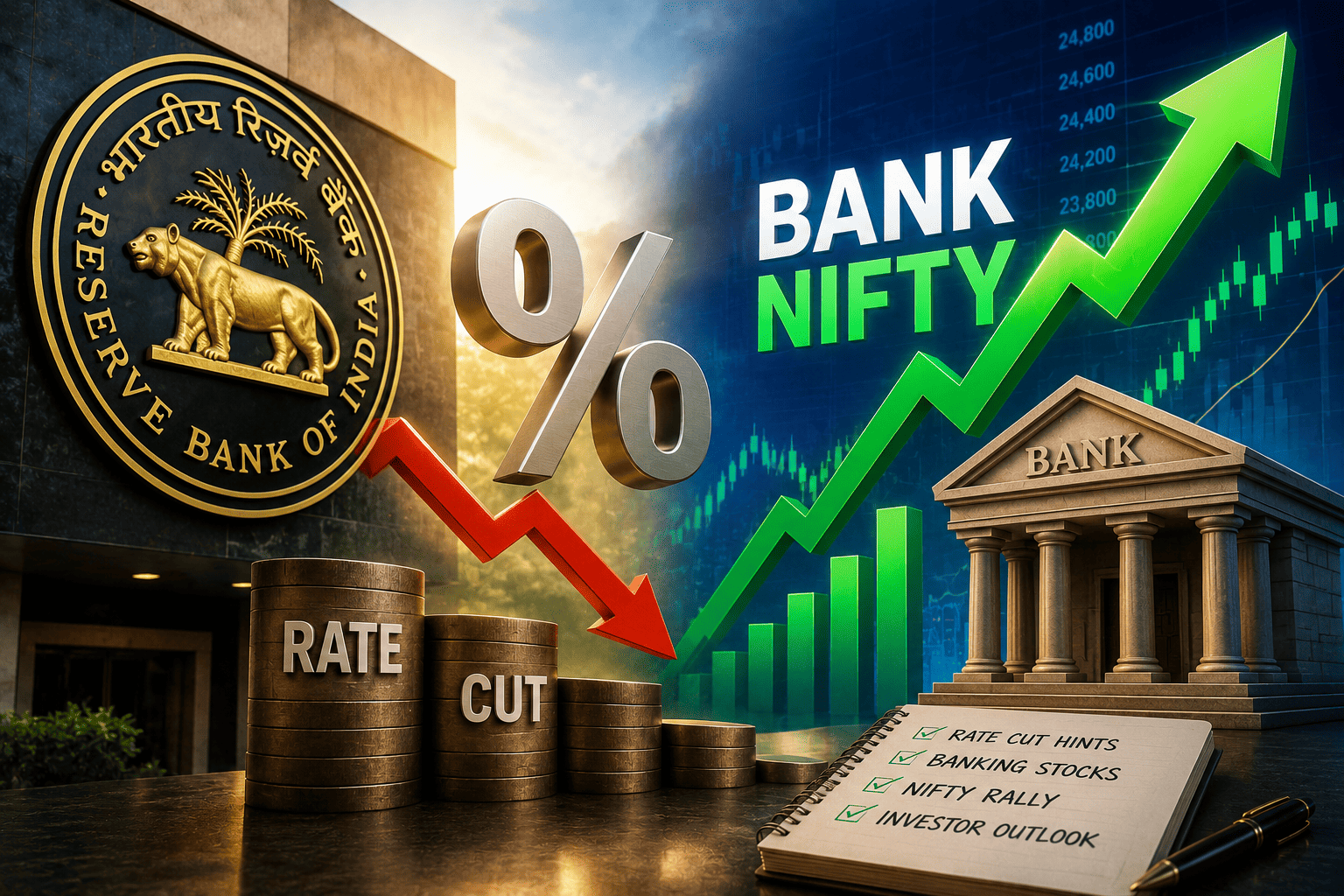
Reserve Bank of India Governor's recent dovish commentary at the Confederation of Indian Industry event has sent ripples across Dalal Street, with banking stocks leading a sharp rally as markets begin pricing in the possibility of monetary easing.
What's driving the banking market today?
The RBI Governor's speech at the CII event marked a notable shift from the central bank's hawkish stance maintained over the past two years. With retail inflation showing signs of moderation and core inflation dropping to 3.2% in April 2026, the Governor hinted that the monetary policy committee could consider rate cuts if inflation remains within the 4-6% target band through the next quarter.
This dovish pivot comes after 18 months of aggressive monetary tightening that saw the repo rate climb from 4% to 6.75% between 2022 and 2025. The cumulative 275 basis points increase was aimed at taming inflation that had touched uncomfortable highs of 7.8% during the post-pandemic recovery phase.
Current economic indicators suggest the RBI's inflation battle is showing results. Headline inflation has consistently remained below 5% for three consecutive months, while core inflation – which excludes volatile food and fuel prices – has declined to multi-year lows. This provides the central bank with much-needed policy space to support economic growth.
Impact on Indian markets
Markets responded enthusiastically to the Governor's comments, with the Bank Nifty surging 2.5% in Thursday's trading session. The broader Nifty 50 gained 1.8%, closing at fresh highs as investors rushed to position themselves ahead of potential rate cuts.
Banking stocks led the charge, with HDFC Bank, ICICI Bank, and State Bank of India posting gains between 3-4%. The optimism extended beyond traditional banking, with non-banking financial companies (NBFCs) like Bajaj Finance and housing finance companies such as HDFC Limited and LIC Housing Finance witnessing strong buying interest.
Foreign institutional investors (FIIs), who had been net sellers for the past month due to concerns over India's elevated interest rates relative to global peers, pumped in ₹2,400 crore into Indian equities on Thursday. This marked their largest single-day investment since March 2026, signaling renewed confidence in India's monetary policy trajectory.
The rupee strengthened against the dollar, appreciating to 82.45 from the previous close of 82.78, as expectations of lower interest rates typically support currency stability through improved economic growth prospects.
Stocks and sectors in focus
Rate-sensitive sectors are experiencing a broad-based rally following the Governor's dovish commentary. Auto stocks, which typically benefit from lower borrowing costs due to their dependence on consumer financing, saw significant gains. Maruti Suzuki, Tata Motors, and Bajaj Auto each posted gains exceeding 3% as investors anticipated improved vehicle demand with cheaper credit availability.
Real estate stocks emerged as another major beneficiary, with DLF, Godrej Properties, and Prestige Estates jumping 4-6%. Lower interest rates directly impact home loan EMIs, potentially boosting property demand ahead of the upcoming festive season.
For investors looking to participate in this potential rate cut cycle, opening a demat account with a reliable broker becomes crucial to access these emerging opportunities across sectors.
Infrastructure and capital goods companies also gained traction, as reduced borrowing costs could accelerate project executions and new investments. Larsen & Toubro, UltraTech Cement, and JSW Steel witnessed healthy buying interest from institutional investors.
What should investors do?
While the Governor's hints are encouraging, investors should exercise caution and avoid making hasty stock investment decisions based solely on rate cut expectations. The RBI's August policy meeting remains three months away, and several factors could influence the final decision.
Global crude oil prices, currently hovering around $78 per barrel, remain a key variable. Any significant spike in energy costs could reignite inflationary pressures, forcing the RBI to maintain its restrictive stance. Additionally, monsoon patterns and food price dynamics will play crucial roles in shaping the inflation outlook.
Experienced market participants recommend a gradual approach to building positions in rate-sensitive sectors. Using a reliable trading platform to execute systematic investment plans (SIPs) in banking and financial services mutual funds could be a prudent strategy for retail investors.
Investors should also monitor the RBI's commentary in upcoming speeches and policy minutes for confirmation of this dovish shift. The central bank has historically been cautious about signaling policy changes too far in advance, making the Governor's recent hints particularly significant.
Key Takeaways
This article is for informational purposes only and does not constitute investment advice.