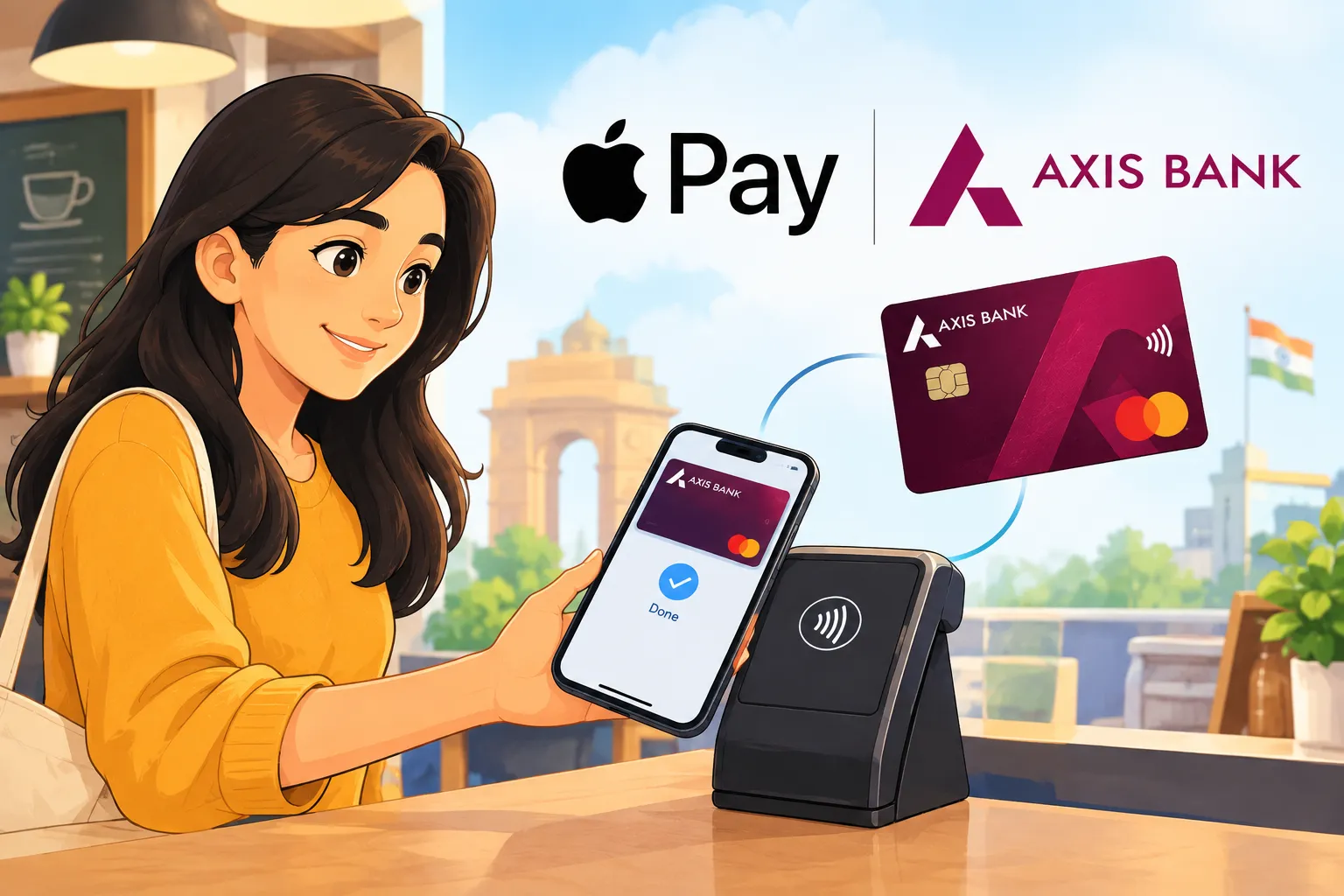
Apple Pay launched in India on 30 September 2026 for iPhone, iPad and Apple Watch, with Axis Bank-issued Visa and Mastercard credit cards supported first, letting cardholders pay in stores, in apps and online without PINs or OTPs.
What Apple Pay Supports at Launch
Apple announced on 30 September 2026 that Apple Pay is available to users in India across iPhone, iPad and Apple Watch, with Mac support coming soon. At launch, only customers with Axis Bank-issued Visa and Mastercard credit cards can add their cards.
| Detail | At launch |
| Cards | Axis Bank-issued Visa and Mastercard credit cards |
| Devices | iPhone XR or later with iOS 18 or later; Apple Watch Series 6 or later with watchOS 11 or later; iPad |
| Mac | Coming soon |
| How to add a card | Latest Axis Bank app, or the plus sign in the Wallet app on iPhone |
| How to pay in stores | Double-click the side or Home button, authenticate, then hold the device near the contactless reader |
| Authentication | Face ID, Touch ID or device passcode |
Apple says customers continue to earn the rewards and benefits their cards offer when they pay through Apple Pay.
Where You Can Use It
Apple Pay works at any terminal that accepts NFC (near field communication) payments, which is the technology behind tap-to-pay. Apple has also named merchants that accept it at launch: Apple Store locations, Blinkit, Chaayos, Comet, Croma, Interflora, Ixigo, Le15 Patisserie, Reliance brands, Tata 1mg and Zomato.
For online and in-app payments, Apple worked with payment service providers including BillDesk, Cashfree, Juspay, Mswipe, Paytm, PayU, Pine Labs and Razorpay. Apple says more merchants and apps will be added over time. Apple Pay is already available in more than 90 countries and regions.
How Apple Protects Your Card Details
Apple Pay does not store the real card number on the device or on Apple's servers, and Apple does not share it with the merchant. Instead, a unique Device Account Number is assigned, encrypted and kept in the Secure Element, a certified chip built to store payment information.
Apple also says it does not retain transaction information that can be tied back to the user. If an iPhone is lost or stolen, the owner can use the Find My app to locate it, lock it or suspend payments from that device.
Mastercard's president for India and South Asia, Gautam Aggarwal, said every Apple Pay transaction on a Mastercard is protected by a unique, cryptographically secured token. Tokenisation means the real card details are replaced by a token, so merchants never see them.

What Apple Pay Does Not Cover Yet
Apple's launch announcement names only Axis Bank credit cards on the Visa and Mastercard networks. It does not mention debit cards or other banks. The Apple Post reports that Apple Pay does not support UPI at launch.
This makes Apple Pay a card feature for now. Many everyday payments in India run on UPI, so Apple Pay at launch does not replace UPI apps. Customers of banks other than Axis Bank cannot add their cards on day one, based on what Apple has announced.
Also Read : Jio Financial and Allianz Put ₹640.10 Crore into Insurance JV
What Cardholders Should Check
Axis Bank customers who want to use the service can open the latest version of the Axis Bank app and look for the option to add a card to Apple Wallet. Apple's setup steps refer to adding an eligible card, and the announcement does not list which Axis Bank cards qualify, so cardholders should confirm their card type with the bank.
Customers who do not use an iPhone, iPad or Apple Watch will see no change. Customers with older devices should check that the device meets the iOS 18 or watchOS 11 requirement before trying to add a card.
Why the Launch Matters for Indian Payments
Apple Pay adds a new way to use a credit card at the till and online, built on card tokens rather than typed card details. Axis Bank is the only issuer named in the launch announcement, and the announcement does not say when other banks will join. Apple says more merchants and apps are coming over time. Whether other issuers or card types are added will be clear only when Apple or the banks announce it.
This content is for information only and is not investment advice. Investments are subject to market risks. Please do your own research before investing.