
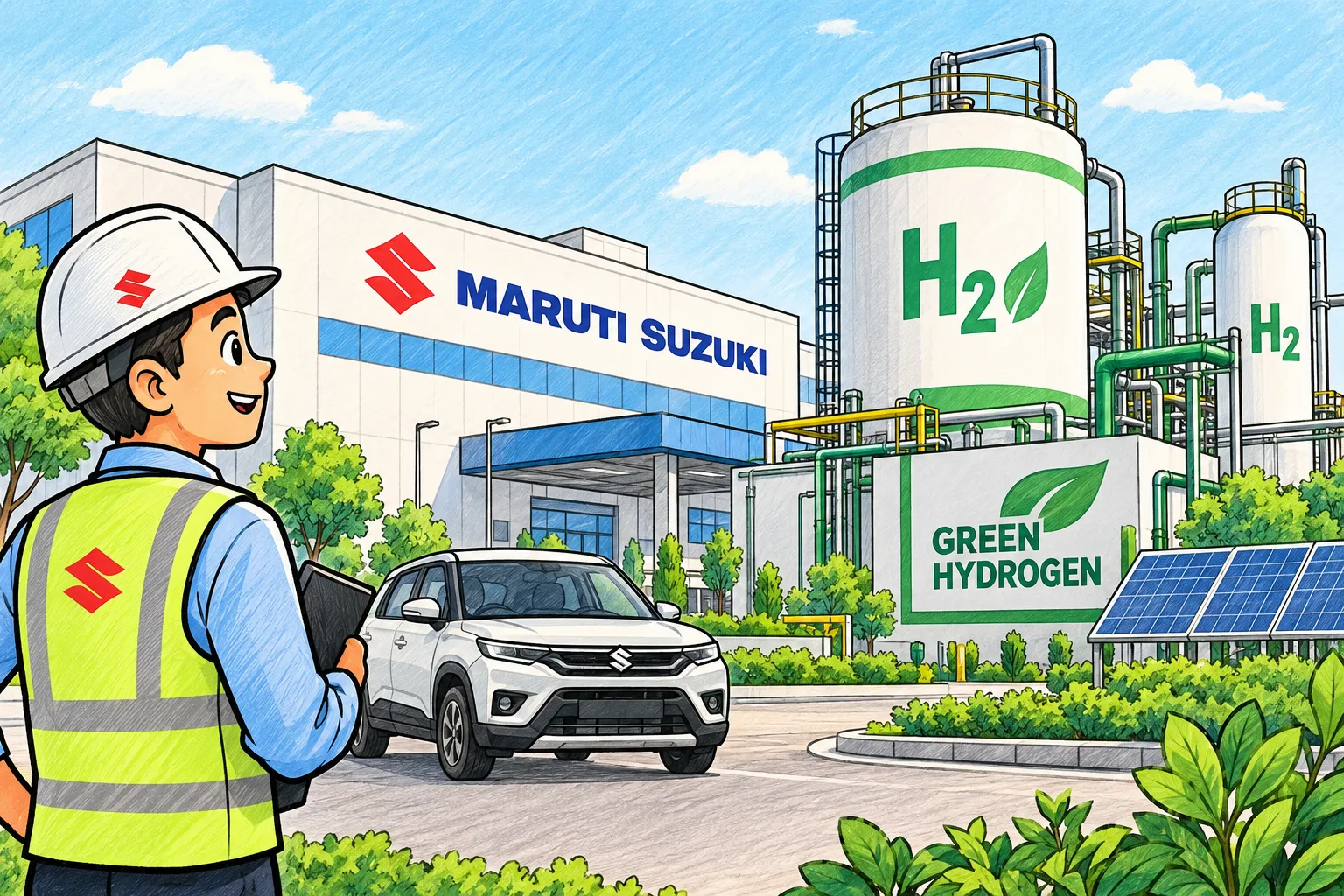
Maruti Suzuki commissioned a 300 kW green hydrogen electrolyser plant at its Manesar facility on September 24, using surplus solar power to cut fossil fuel use in manufacturing, as the automaker widens its renewable-energy push across India.
A First For The Manesar Plant
Maruti Suzuki India announced on Thursday that it had commissioned a 300 kW green hydrogen electrolyser at its Manesar manufacturing facility in Haryana, the company's first plant of this kind. The unit will use surplus solar power generated at Manesar, particularly during holidays when factory demand is low, to produce green hydrogen through electrolysis.
That hydrogen will be stored and then blended with natural gas for use as process fuel in manufacturing, the company said in an exchange filing. The goal is to put renewable power that would otherwise go unused to productive use, while trimming the site's dependence on fossil fuel for its process-heating needs.
Maruti Suzuki plans to extend the approach to more of its manufacturing sites in Haryana and Gujarat, based on what it learns from running the Manesar pilot.
Part Of A Broader Clean Energy Push
The hydrogen project sits alongside several other clean-energy moves at the company. Maruti Suzuki is expanding solar power capacity, using renewable electricity procurement and power purchase agreements, and building out biogas and battery storage capacity at its plants.
At its Kharkhoda facility, the company is in advanced stages of setting up a 10-tonnes-per-day biogas plant and has already commissioned a 1 MWh battery energy storage system. Maruti Suzuki's board has also approved four compressed biogas projects carrying a combined budget of ₹561 crore.
In June, the company said it would invest ₹925 crore by FY2030-31 towards green-energy initiatives, including its biogas projects, a figure the company's own investor communications confirm.

The Emissions Target Behind The Push
Managing Director and CEO Hisashi Takeuchi linked the Manesar plant directly to the company's competitive standing as a manufacturing base. He said Maruti Suzuki's position as a manufacturing hub would increasingly depend not just on cost and quality but on the carbon intensity of its production.
"The commissioning of our 300 kW green hydrogen plant is aligned with the Government of India's Green Hydrogen Mission. This, along with expansion of solar, biogas and installation of battery energy storage system reflects our commitment to transition to cleaner and sustainable energy solutions," Takeuchi said.
The company has set itself a specific target: cutting its manufacturing carbon footprint from the current 615,000 tonnes to 266,000 tonnes by FY2030-31, according to its official release, a reduction of more than 55 per cent over roughly five years.
Also Read: Bank Strike Sept 28-30: Branches to Open on Sunday, Sept 27
Why It Matters For Investors
For a company the size of Maruti Suzuki, the Manesar plant's own emissions impact is modest at 300 kW. Its significance lies elsewhere: it signals that the country's largest carmaker is treating decarbonisation of its factories as a structural cost and reputational issue, not a side project. As global and Indian buyers increasingly weigh a manufacturer's carbon footprint, alongside price and quality, in sourcing decisions, that carries implications for Maruti Suzuki's export competitiveness and its standing with environmentally focused institutional investors.
The move also aligns Maruti Suzuki with the government's National Green Hydrogen Mission, which aims to position India as a global hub for green hydrogen production, giving the company an early foothold in a technology several other Indian industrial names, including GAIL and L&T, have also begun adopting at their own plants.