
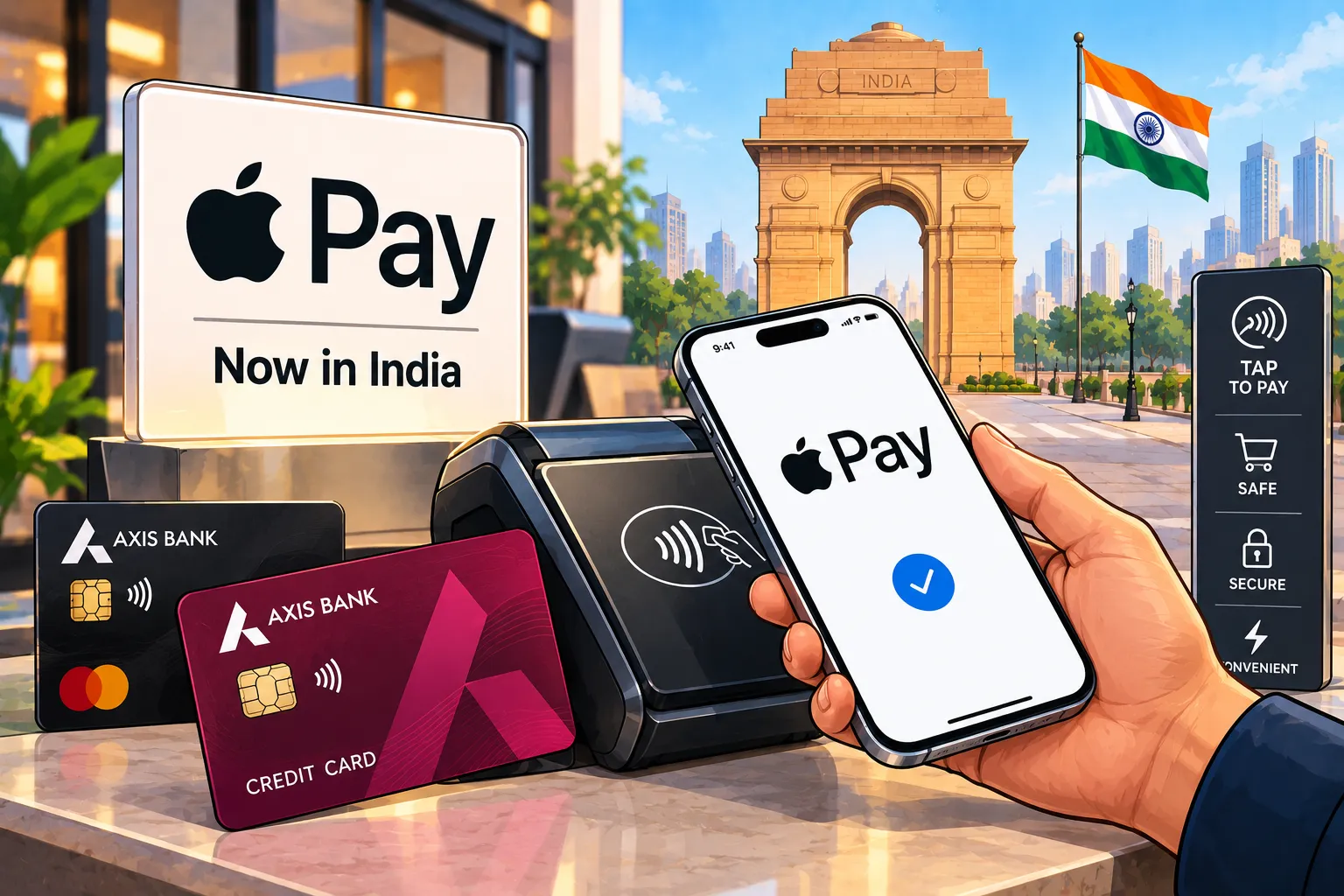
Apple Pay has launched in India on iPhone, iPad and Apple Watch, with Axis Bank-issued Visa and Mastercard credit cards the only ones supported at launch, letting users tap to pay in stores and online without entering PINs or OTPs.
What Launched And Who's Included
Apple Pay is now live in India, enabling payments via iPhone, iPad and Apple Watch, with Mac support expected soon. At launch, only Axis Bank-issued Visa and Mastercard credit cards can be added to the service; customers can add an eligible card through the latest Axis Bank app, or directly via the Wallet app on iPhone. "India is home to a dynamic and digitally savvy population that continues to embrace a cashless future while expecting the highest standards of security and privacy, and we're so excited to bring Apple Pay to users in India today," said Jennifer Bailey, Apple's vice-president of Apple Pay and Apple Wallet.
Axis Bank MD and CEO Amitabh Chaudhry said the launch would give the bank's credit card customers greater choice and flexibility across the Mastercard and Visa networks.
How Payments Work
For in-store purchases, users double-click the side button or Home button, authenticate via Face ID, Touch ID or a device passcode, and hold the iPhone or Apple Watch near a contactless reader; this works via the device's NFC chip even without an internet connection, though a transaction won't appear in history until the device reconnects. Apple Pay also works for online and in-app purchases on iPhone and iPad, and in third-party browsers via QR-code scanning at participating merchants. Users continue to earn their card's usual rewards and benefits when paying this way. Apple charges no fee for using the service, though card issuers may apply their standard charges.
The Security Model
Apple said actual card numbers are never stored on the device or Apple's servers, nor shared with merchants; instead, a unique, encrypted Device Account Number is stored in the device's Secure Element chip. Mastercard India and South Asia president Gautam Aggarwal said transactions are further protected via Mastercard's tokenisation technology, with a unique cryptographic token generated per transaction; Visa's India and South Asia group country manager Suresh Sethi made a similar point about Visa's tokenisation capabilities. If a device is lost or stolen, users can use Find My to locate, lock, or suspend payments from it.

Where It Can Be Used
At launch, Apple Pay will be accepted at merchants including Apple Store locations, Blinkit, Chaayos, Comet, Croma, Interflora, Ixigo, Le15 Patisserie, Reliance brands, Tata 1mg and Zomato. Apple has also partnered with payment service providers Cashfree, JusPay, Mswipe, Paytm, PayU, Pine Labs, Razorpay and Worldline to extend acceptance across their merchant networks. The service requires an iPhone XR or later on iOS 18+, or Apple Watch Series 6 or later on watchOS 11+ paired with a supported iPhone. Apple Pay is already live in more than 90 countries with over 11,000 bank and network partners globally.
Also Read: CAFE-3 Fuel Efficiency Norms Notified Without Carve-Out For Small Cars
Why It Matters
A single-bank launch is a deliberately narrow entry point into a market that is overwhelmingly dominated by UPI's zero-fee, interoperable rails, so Apple Pay's near-term relevance will hinge on how many other Indian banks it signs up and how quickly, since credit-card tap-to-pay is a materially smaller addressable use case than UPI's peer-to-peer and small-merchant volumes. Still, for iPhone users with Axis Bank credit cards, and for merchants already wired up through the eight listed payment service providers, the launch gives Apple a foothold in a market it has approached cautiously for years, at a moment when the UPI ecosystem itself is absorbing a new merchant discount rate from October 15, a shift that could make card-based tap-to-pay comparatively more attractive to merchants weighing payment costs.