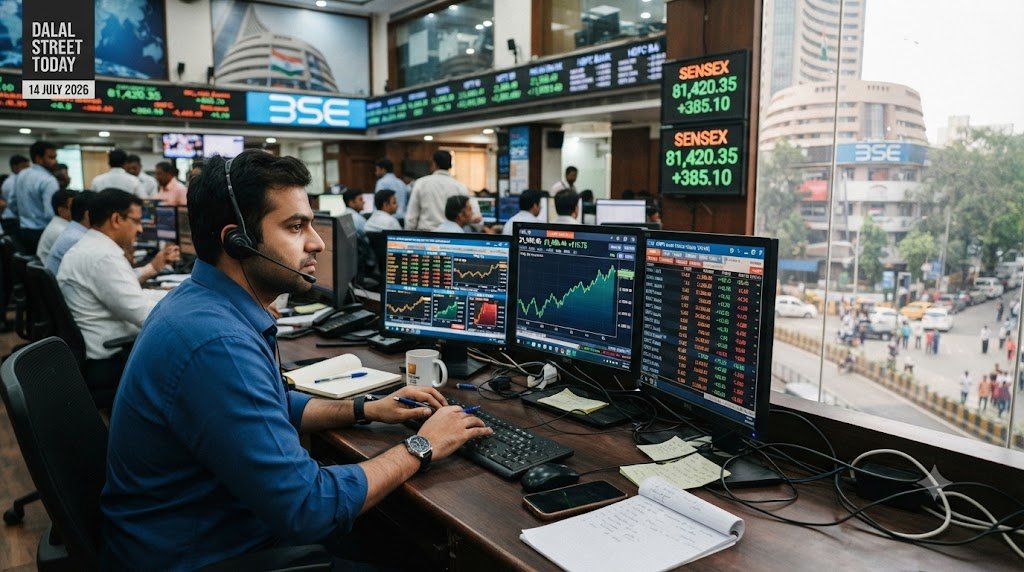
Indian equity markets are navigating a complex web of global cues, domestic macroeconomic signals, and sector-specific catalysts as Dalal Street kicks off Thursday's session on 16 July 2026 — here is everything retail investors need to know before making their next move.
What's Driving the Market Today?
Benchmark indices are trading with cautious optimism as investors digest a mixed bag of triggers. The BSE Sensex is hovering around the 83,400–83,700 range, while the NSE Nifty 50 is consolidating near the 25,450–25,600 zone, reflecting a tug-of-war between bulls and bears. Global sentiment received a mild boost after the US Federal Reserve hinted at a measured pace of rate adjustments in its latest FOMC minutes, easing fears of abrupt monetary tightening that could trigger foreign fund outflows from emerging markets like India.
On the domestic front, the Reserve Bank of India's accommodative stance — following its rate pause in the June 2026 policy meeting — continues to support rate-sensitive sectors such as banking, real estate, and NBFCs. Retail inflation, measured by the Consumer Price Index (CPI), has eased to approximately 4.3% for June 2026, comfortably within the RBI's 2–6% tolerance band, giving policymakers room to support growth without aggressive tightening.
Crude oil prices remain a key watch item. Brent crude is trading near $82–84 per barrel, a level that poses moderate pressure on India's import bill but remains manageable compared to the elevated levels seen in 2022–23. The Indian rupee is holding steady against the US dollar near the 83.60–83.90 range, supported by strong forex reserves and healthy FII inflows seen earlier this week.
Impact on Indian Markets
Foreign Institutional Investors (FIIs) have been net buyers in the Indian cash market this week, pumping in roughly ₹2,800–3,200 crore over the past three sessions — a positive signal that global funds continue to view India as a preferred emerging market destination. Domestic Institutional Investors (DIIs), including mutual funds, have also remained net buyers, providing a strong support base even on days of global volatility. This sustained dual buying has helped cushion the Nifty from sharper corrections despite intermittent profit-booking at higher levels.
The broader market is reflecting a healthy risk appetite. The Nifty Midcap 100 index has outperformed the large-cap benchmark over the past month, gaining close to 4–5%, while the Nifty Smallcap 100 has seen selective stock-specific action. This continued participation from mid and small-cap counters suggests that the rally is broadening beyond just index heavyweights — an encouraging sign for long-term stock investment strategies.
Stocks and Sectors in Focus
Several key sectors and stocks deserve close attention today:

- Banking and Financials: HDFC Bank, ICICI Bank, and Kotak Mahindra Bank remain in focus ahead of their quarterly earnings announcements. Analysts expect healthy net interest margin (NIM) sustenance and robust loan growth figures for Q1 FY27. The Nifty Bank index is trading near its 52-week high zone, and any earnings beat could push it to fresh record territory.
- IT and Technology: Infosys, TCS, and Wipro are under the spotlight following mixed commentary from US tech clients about discretionary spending. HCL Technologies recently reported better-than-expected deal wins, lifting sector sentiment. The Nifty IT index is up approximately 2.8% over the past five sessions.
- Auto Sector: Maruti Suzuki, Tata Motors, and Bajaj Auto are benefitting from healthy June 2026 retail sales data and expectations of a strong festive season pipeline. EV-related themes continue to attract institutional interest.
- Pharma and Healthcare: Sun Pharma, Dr. Reddy's, and Cipla are seeing renewed buying interest on the back of a weak rupee advantage for US generic exports and improving USFDA inspection outcomes.
- Realty and Infrastructure: DLF, Godrej Properties, and L&T are performing well amid government infrastructure spending commitments and resilient urban housing demand.
Investors looking to participate in these sectoral themes can explore options through a reliable trading platform that offers real-time data, research tools, and seamless order execution on NSE and BSE.
What Should Investors Do?
For retail investors, the current market environment calls for a balanced and disciplined approach. With Nifty trading near historically elevated valuations — the Nifty 50 price-to-earnings (P/E) ratio is hovering around 22–23x on a trailing twelve-month basis — indiscriminate buying carries risk. However, systematic investment through SIPs in diversified equity mutual funds, or selective stock picking in quality large-cap and midcap names with strong earnings visibility, remains a sound strategy.
Investors who are yet to participate in the equity market growth story should consider taking the first step and open demat account with a SEBI-registered broker to gain structured access to India's dynamic capital markets. Always ensure your portfolio allocation is aligned with your risk tolerance and financial goals.
From a historical perspective, market corrections of 5–8% have been healthy consolidation phases within India's structural bull market. Investors who stayed invested through the volatility of late 2025 and early 2026 have been rewarded handsomely, reinforcing the importance of a long-term horizon.
Risks to Keep in Mind
While the overall trajectory remains positive, investors must monitor the following risks closely:
- Any sharp escalation in crude oil prices above $90/barrel could revive inflation fears and pressure the rupee.
- Weaker-than-expected Q1 FY27 earnings from index heavyweights could trigger profit-booking at current levels.
- Global geopolitical flashpoints — particularly in the Middle East and the Taiwan Strait — remain wildcard risks for FII sentiment.
- SEBI's ongoing regulatory reviews around F&O segment participation and algorithmic trading norms could temporarily impact derivatives market liquidity.
Key Takeaways
- Sensex and Nifty are trading range-bound near 83,400–83,700 and 25,450–25,600 respectively, with cautious optimism prevailing.
- FII and DII buying continues to support the market; CPI inflation at 4.3% keeps the RBI's accommodative stance intact.
- Banking, IT, Auto, Pharma, and Realty are the key sectors to watch, with Q1 FY27 earnings season acting as a near-term catalyst.
- Crude oil near $82–84/barrel and a stable rupee at 83.60–83.90 against the dollar reduce macro headwinds for now.
- Retail investors should maintain a disciplined SIP approach, avoid over-leveraging in F&O, and focus on quality stocks with strong earnings visibility.
This article is for informational purposes only and does not constitute investment advice.