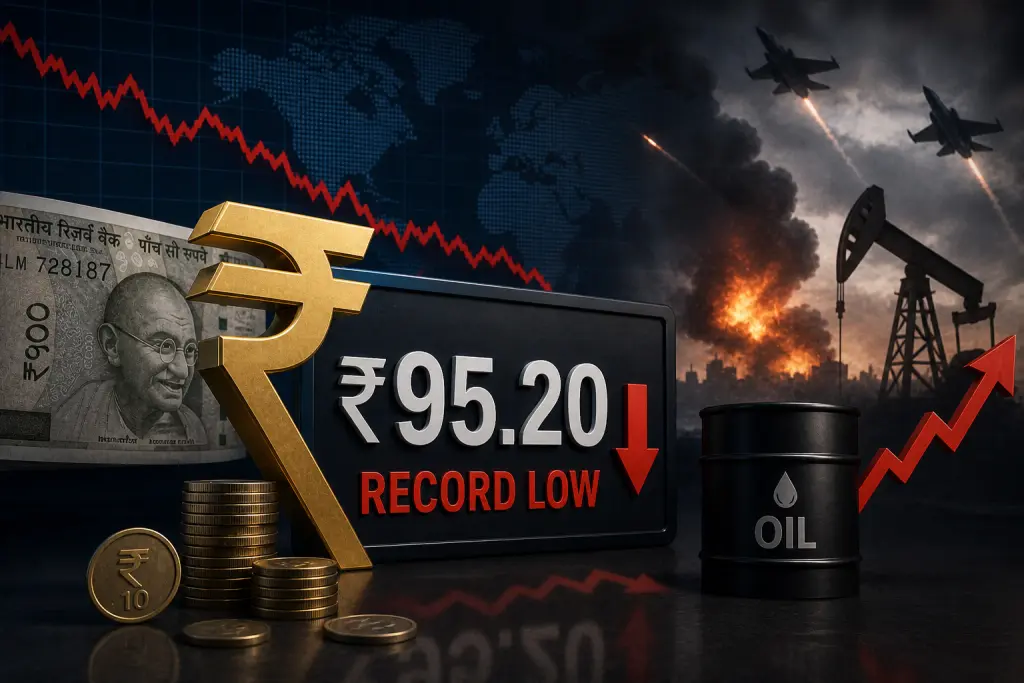

The Indian rupee just bounced back from an all-time closing low. A 20 paise gain in a single session may sound small, but the forces driving it tell a bigger story. Markets are watching closely.
What Pushed the Rupee Higher?
The rupee opened at 94.30 against the US dollar on Friday and quickly gained ground, touching 94.20 in early trade. That marks a 20 paise recovery from its previous all-time closing low. Three things came together to make this happen.
First, optimism around an India-US trade deal gave markets a confidence boost. Second, crude oil prices stayed soft, which directly eases India's import bill. Third, foreign inflows into Indian markets improved, adding to dollar supply in the system. Forex traders noted that the overall bias remains positive for the rupee in the near term.
Key insight: When crude prices fall and foreign inflows rise at the same time, the rupee tends to find strong support. Both factors are currently working in its favour.
What Did India and the US Actually Agree On?
Indian Foreign Secretary Vikram Misri confirmed on Thursday that trade was a central topic in discussions between Prime Minister Narendra Modi and US President Donald Trump. Both leaders directed their negotiators to finalise the proposed trade pact at the earliest. Further rounds of negotiations are expected soon.
This is not a signed deal yet. But the political signal is clear. When two heads of state personally push for faster movement, markets take note. That kind of momentum reduces uncertainty, and currency markets respond to certainty.
Why Does a Trade Deal Matter for the Rupee?
A trade agreement between India and the US can open up export opportunities for Indian businesses. More exports mean more dollar earnings flowing back into India. That supports the rupee over time.
Beyond exports, a deal also signals a stable trade relationship. That attracts foreign investors who want to put money into Indian equities and bonds. More foreign investment means more dollar inflows, which directly strengthens the rupee.
What Is the RBI Likely to Do Next?
The Reserve Bank of India is expected to use incoming dollar flows to rebuild its forex reserves. After a period of reserve drawdown to defend the rupee, this is a natural next step. The RBI is likely to intervene gradually, managing volatility without letting the rupee overshoot in either direction.
This measured approach means the rupee may not spike sharply, but it should hold its gains if conditions remain supportive. Traders and importers should plan with that in mind.

Key insight: The RBI rebuilding reserves while the rupee strengthens is a healthy combination. It gives the central bank more room to manage future shocks.
Key Factors to Watch for the Rupee in Coming Weeks
- Progress on India-US trade negotiations and any formal announcements
- Global crude oil price movement and its impact on India's import bill
- FII inflow trends into Indian equity and debt markets
- RBI's pace of forex reserve accumulation
- US dollar index movement and broader global risk sentiment
The rupee's rebound is not just a one-day story. If trade talks move forward and crude stays soft, the currency could hold and even extend its gains. Investors, importers, and businesses with dollar exposure should track these developments closely over the coming weeks.
FAQs
Why did the Indian rupee go up today?
The rupee gained 20 paise against the US dollar on Friday, driven by positive signals from India-US trade talks, softer crude oil prices, and better foreign inflows. All three factors came together on the same day, which gave the currency a strong push. Traders expect the positive mood to continue if these conditions hold.
What is the India-US trade deal and how does it affect the rupee?
India and the US are working on a bilateral trade agreement that could boost Indian exports and attract more foreign investment into the country. More exports and investment mean more dollars flowing into India, which supports the rupee. The deal is not finalised yet, but both governments have asked their teams to speed up the process.
How do falling crude oil prices help the Indian rupee?
India imports a large share of its crude oil needs, so when global oil prices fall, India spends fewer dollars on imports. This reduces the demand for dollars in the market and eases pressure on the rupee. Lower crude prices are one of the most direct ways the rupee gets relief.
How does a stronger rupee affect stock market investors in India?
A stronger rupee generally boosts confidence among foreign institutional investors, which can lead to more money flowing into Indian equities and bonds. It also benefits companies that import raw materials, as their costs come down. However, export-heavy companies like IT firms may see some pressure on their earnings when the rupee strengthens.
Should importers and businesses with dollar payments act now or wait?
If trade talks progress well and crude stays soft, the rupee could hold its gains or move slightly higher in the near term. Businesses with upcoming dollar payments may want to watch the next few weeks closely before locking in rates. It is always wise to consult a forex advisor before making large hedging decisions.
What will the RBI do as the rupee strengthens?
The Reserve Bank of India is likely to buy dollars from the market to rebuild its forex reserves, which had been used earlier to defend the rupee during periods of weakness. This means the RBI may slow down any sharp appreciation in the rupee to keep it stable. A well-stocked reserve gives the central bank more tools to handle future currency volatility.